Look, I get it. You want the T-Rex photo. Everyone does. But after you’ve spent three hours in a car to stand in a queue for a thirty-second selfie at Kelingking, you might start wondering if there is anything else to this island. Anything … real. The truth is, most people only see about 10% of Nusa Penida. They stay on the paved-ish roads, hit the “Big Three” spots, and leave thinking they’ve seen it all. They haven’t. Honestly, the real soul of this place is hidden down the goat paths and the crumbling limestone stairs that the tour buses can’t reach. It’s a bit messy, it’s definitely sweaty, and you’ll probably get a few scratches on your legs, but that’s where the magic is. If you’re tired of the “content farms” and want to actually feel the pulse of the island, you need to go south. Or deep into the jungle.
The southern coast of Penida is a different world. It’s rugged, it’s spiritual, and it’s mostly empty. While the West Coast is a circus, the South is a sanctuary. But a fair warning: these Nusa Penida hidden gems aren’t “easy” spots. There are no smooth parking lots or fancy cafes waiting for you. It’s just you, the wind, and some of the most dramatic cliffs on the planet. I think it’s the best part of the island. Maybe I shouldn’t even be writing this. Some of these places feel like they should stay secret… but if you’re the type of person who doesn’t mind a bit of a struggle for a world-class view, then this guide is for you.
Tembeling Forest and Natural Pools: The Lost World
This is my favorite place on the island. Period. Tembeling is tucked away on the west coast, but it feels like you’ve stepped into a scene from Jurassic Park. It’s not just a beach; it’s an entire ecosystem. You start at the top of a steep, winding track that is absolutely not meant for cars. If you aren’t an expert on a scooter, don’t even try it. Hire a local “ojek” (scooter taxi) at the entrance. They’ll zip you down for a few bucks, and believe me, it’s a ride you won’t forget. Your knuckles will be white by the time you reach the bottom.
Once you get off the bike, you walk into a primary rainforest. It’s cool, it’s green, and it smells like damp earth and ancient trees. Then you see them—the pools. There’s a large freshwater pool tucked right under a massive limestone overhang. The water is a deep, clear blue and it’s cold enough to take your breath away. It’s a sacred spot for the locals, so be respectful. There’s even a smaller “secret” pool hidden nearby if you look for it.
- The walk from the parking area to the pools is about 15 minutes through the jungle.
- There is a small cave you can walk through that leads out to a pebble beach.
- The waves at Tembeling beach are brutal—don’t try to swim in the ocean here.
- Bring a sarong just in case, though the pools themselves are usually fine for swimming in regular gear.
- Watch your step; the moss on the rocks near the pools is slippery as ice.
The best part about Tembeling is the silence. Even when there are other people there, the forest seems to swallow the sound. You can sit in the water and listen to the birds and the crash of the ocean just a few meters away. It’s the perfect antidote to the chaos of the Nusa Penida west coast. Honestly, I could stay there all day. Just don’t forget that you have to climb back up (or ride back up) eventually. The reality check hits hard when you leave that jungle bubble.
Peguyangan Waterfall: The Blue Stairs of Death
Okay, “waterfall” is a bit of a stretch. If you’re expecting a massive thundering curtain of water like in Munduk, you’re going to be disappointed. Peguyangan is more about the journey and the sacred springs. It’s located on the south coast, and to get there, you have to descend about 700 bright blue stairs that are bolted directly onto the side of a vertical cliff. It’s terrifying. If you have vertigo, maybe skip this one. The stairs are narrow, and in some places, you can see right through the slats down to the crashing waves 150 meters below. My knees were shaking the first time I did it… and the second time, too.
At the bottom, you find a small temple and a series of sacred springs. The water pours out of the cliff and into small stone pools right on the edge of the abyss. It’s a pilgrimage site for Balinese Hindus. They come here for “Melukat,” a cleansing ritual. You’ll see them in their white robes, calm and focused, while tourists are huffing and puffing and trying not to drop their phones. It’s a powerful place. The energy is heavy, spiritual, and very real.
- You MUST wear a sarong. You can rent one at the top for about 10k-20k IDR.
- The climb back up is a beast. Don’t do it in the middle of the day.
- There are natural “tubs” where you can sit and let the spring water wash over you while looking at the ocean.
- The views of the coastline from the blue stairs are some of the best on the island.
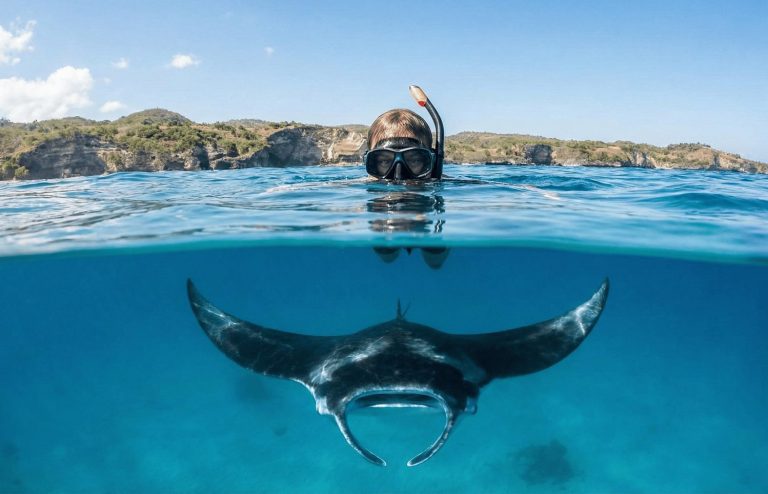
- Keep an eye out for Manta Rays in the water below—they love this part of the coast.
I think Peguyangan is one of the few places where you can truly see the intersection of Penida’s nature and its culture. It’s not just a “photo spot.” It’s a living temple. When you’re sitting in that cold spring water, staring out at the endless Indian Ocean, you forget about the 700 stairs you have to climb to get home. Until you start climbing. Then you remember. Every single one of them. It’s a leg-killer, for sure.
Banah Cliff: The Donut Rock and Absolute Silence
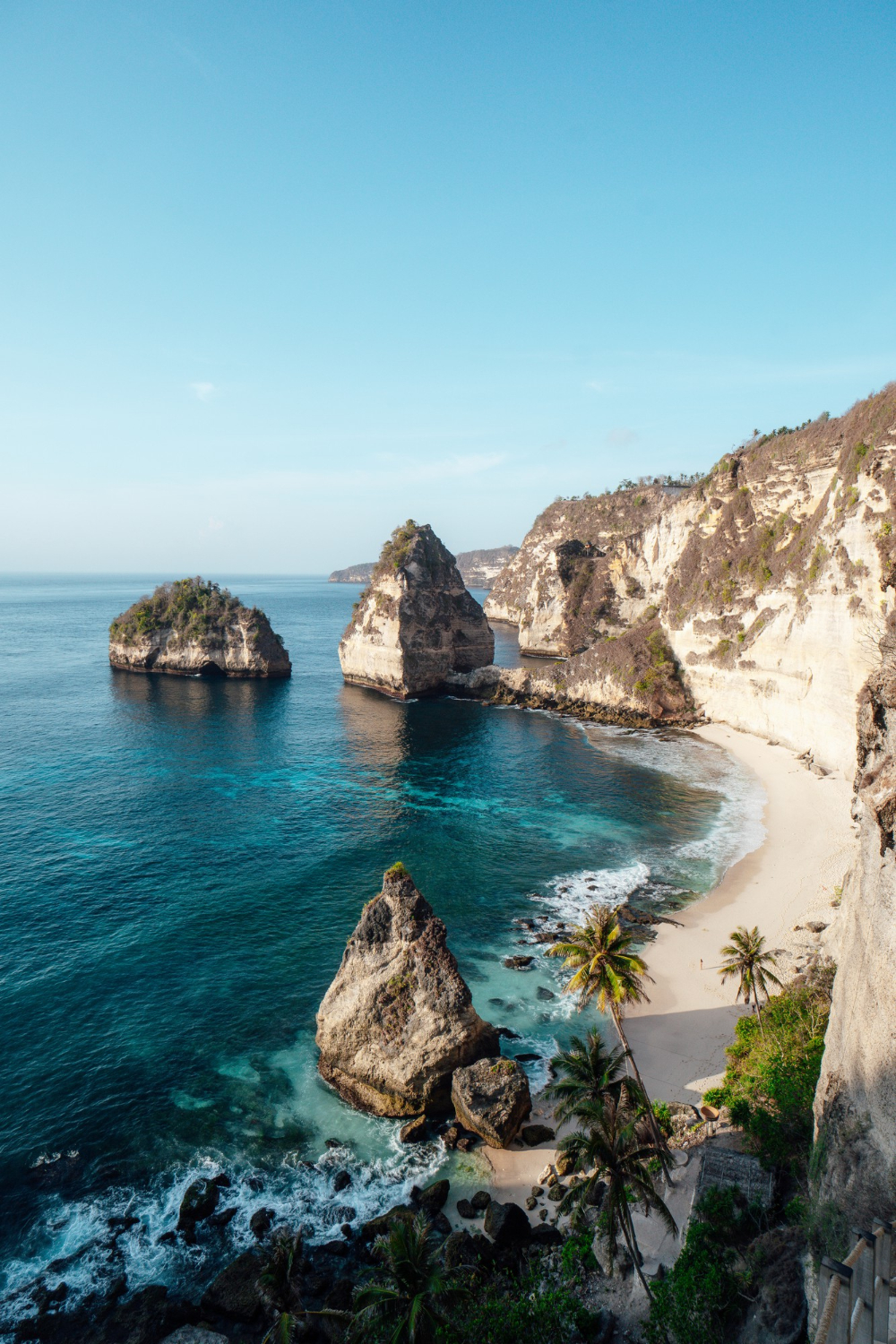
If you want to escape people entirely, go to Banah Cliff. It’s located between Kelingking and Tembeling, but hardly anyone goes there because there’s no “beach” to hike down to. It’s just a viewpoint. But man, what a viewpoint. There are actually two main spots at Banah. One looks south toward a massive arched rock in the ocean—people call it the “Donut Rock.” The other looks north along the coast toward Kelingking.
There are no fences here. No safety railings. No “I Love Nusa Penida” signs. It’s just you and a sheer 200-meter drop into the blue. The wind is fierce, and the scale of the cliffs is honestly dizzying. I like to go here for sunset. While everyone is fighting for a spot at Crystal Bay, you can sit at Banah in total silence. It’s just the sound of the wind and the distant roar of the waves. It’s the most peaceful place on the island.
- The road to Banah is … adventurous. It’s mostly broken limestone and dirt.
- There are no warungs or shops here, so bring your own drinks and snacks.
- Be extremely careful near the edge—the limestone can be crumbly and the wind gusts are unpredictable.
- It’s a great spot for drone photography, but watch out for the eagles; they aren’t fans of drones.
- You can see the tiny white specks of boats at Manta Point from here.
Honestly, Banah Cliff is where you go to realize how wild this island actually is. It’s raw. It’s untamed. It’s the kind of place that makes you feel very small and very alive at the same time. If you’ve spent the day dealing with crowds at the Nusa Penida east coast, Banah will fix your soul. Just make sure you leave before it gets pitch black, because those roads are not something you want to navigate in the dark. Trust me on that.
Seganing Falls: The Sketchiest Stairs on Earth
If Peguyangan wasn’t scary enough for you, try Seganing Falls. It’s nearby, and the “stairs” here are literally just wooden sticks and rocks carved into the cliff side. It’s incredibly sketchy. I’m not even sure I should recommend it, but for the true adrenaline junkies, it’s a must. Like Peguyangan, the “fall” is just a small spring at the bottom, but the hike is what you’re there for. It’s a test of nerves.
The path is so narrow in some places that you have to press your back against the cliff to let someone pass. It’s not for the faint of heart, and definitely not for anyone with shaky legs. But the feeling of reaching the bottom, where the fresh water meets the salty spray of the ocean, is unmatched. It feels like you’ve reached the end of the world.
- Do not attempt this if it’s raining or even slightly damp. It’s a death trap when slippery.
- Wear shoes with serious grip. No flip-flops. No exceptions.
- Check your Nusa Penida transport guide info before heading out; this area is remote.
- Bring a lot of water—you’ll be sweating from fear as much as the heat.
- There is a tiny pool at the bottom where you can cool off before the climb back up.
Suwehan Beach: The Last Secret Beach
Suwehan is like Diamond Beach’s quiet, introverted cousin. It’s located on the far southeast of the island. For a long time, the path was completely destroyed by an earthquake, and you couldn’t get down. They fixed it a few years ago, but it’s still a long, grueling drive to get there. Most people don’t bother. Their loss.
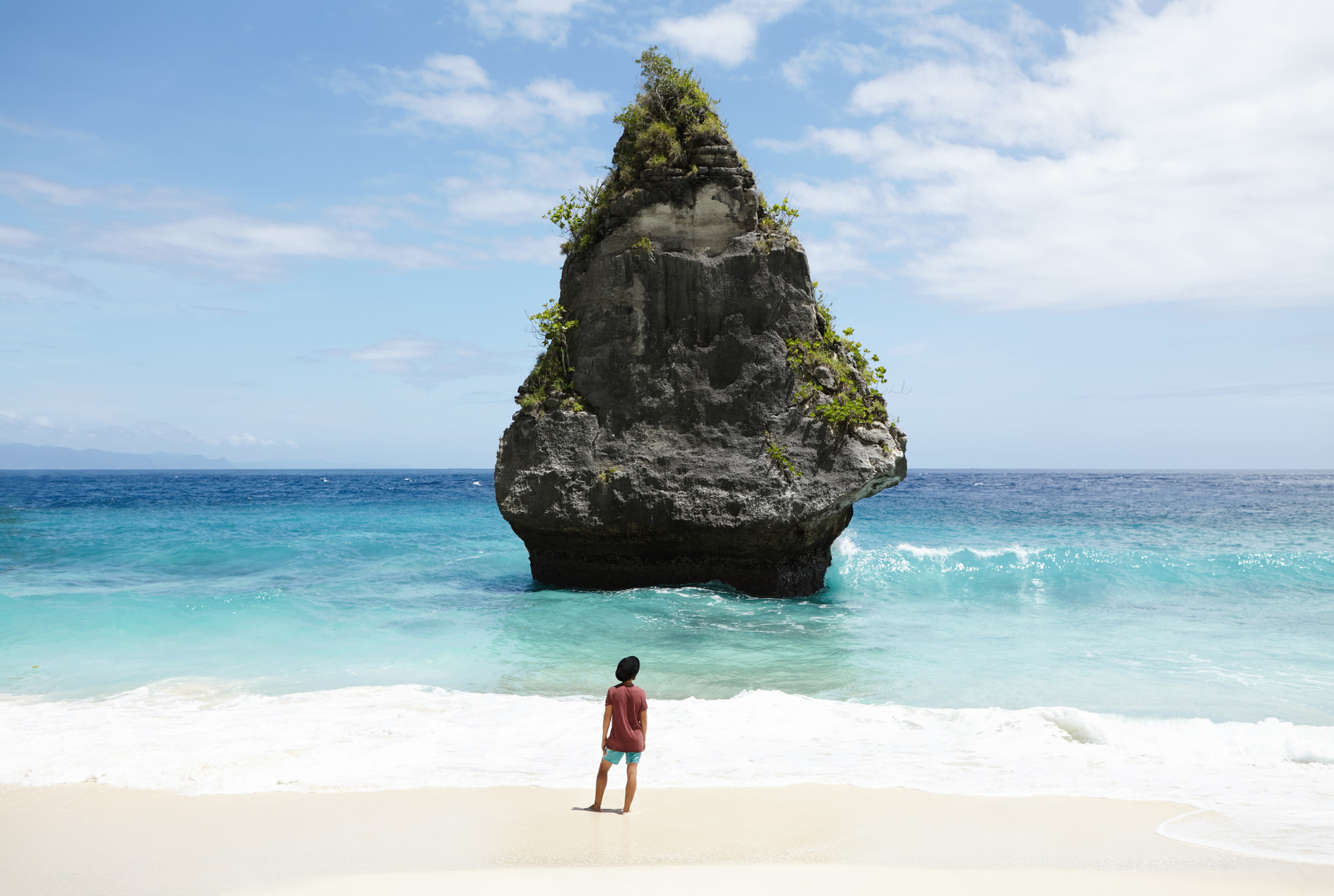
The beach is famous for a large, pointed rock in the water that looks exactly like the Volcom logo. The sand is white, the water is clear, and most of the time, you’ll be the only person there. It’s a bit of a mission to reach, but standing on that sand with no one else in sight is the ultimate Penida luxury. It feels like the island did twenty years ago.
- The drive to Suwehan from the main harbour takes about 90 minutes.
- The stairs are steep but generally in better condition than the ones at Kelingking.
- There is very little shade on the beach, so time your visit for early morning.
- Check the tide; at high tide, the beach can almost disappear.
- It’s a great spot to pack a lunch and just disappear for a few hours.
Practical Tips for Finding the Gems
Finding these places isn’t always easy. Google Maps will try to help, but it often gets confused by the terrain. Sometimes the best way to find a “hidden” spot is to just follow a random road and see where it ends. But before you do that, keep these things in mind. The island is beautiful, but it can be harsh if you aren’t prepared.
- Download Offline Maps: You will lose signal in the south. Every time. Don’t rely on a live connection.
- Small Bills are Essential: Every “hidden” spot usually has a local guy at the top collecting a small parking fee (5k-10k). They won’t have change for a 100k note.
- The Gas Factor: There are no gas stations in the south. If your tank is half empty, fill up at a local stall (the “vodka” bottles) before you head into the hills.
- Respect the Temples: Many of these spots are sacred. If you see a small shrine with offerings (canang sari), don’t step on it and don’t take photos of people praying unless you ask.
- Tell Someone Where You’re Going: If you’re traveling solo to these remote spots, let your hotel know. If you break down at Banah Cliff at 6 PM, it might be a while before anyone else shows up.
Why You Should Go Beyond the Hits
I know it’s tempting to just do the Nusa Penida itinerary that everyone else does. It’s easier. It’s safer for your social media feed. Но честно? The best memories you’ll have of this island aren’t the ones you share with a thousand other people. They’re the moments when you’re standing on a cliff at Seganing, heart pounding, looking at an ocean that feels infinite. Or the moment you dive into the cold blue water at Tembeling and realize you can finally hear yourself think.
Nusa Penida is changing fast. The roads are being paved, the “secret” spots are getting signs, and more hotels are opening every month. See the wild side of the island while you still can. Go the extra mile. Take the bumpy road. Climb the sketchy stairs. The island will reward you in ways a photo of a dinosaur cliff never could. Just bring your sense of adventure, plenty of water, and maybe some spare brake pads. You’re going to need them. Seriously. Now get out there and get lost. It’s the only way to find the real Penida.
If you’re still not sure where to start, check our Ultimate Island Overview to get your bearings. And remember, the best gem is the one you find yourself. Happy exploring. Don’t forget to watch the sunset at least once from a cliff with no name. It’ll change your life… or at least your perspective on what a “vacation” should be.