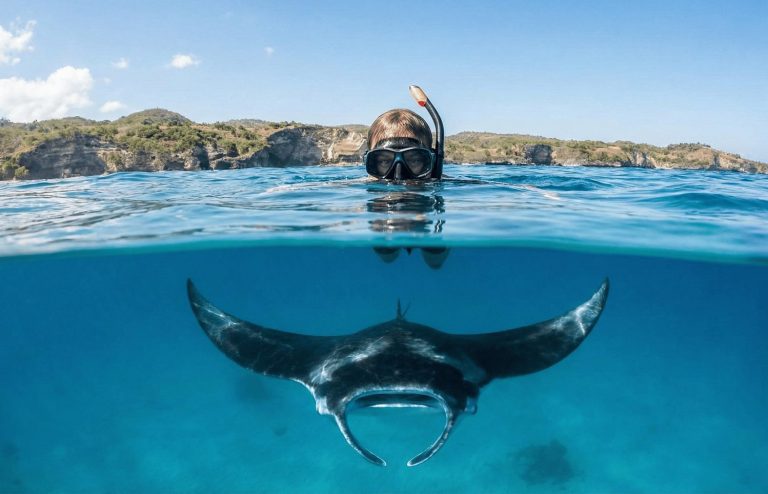
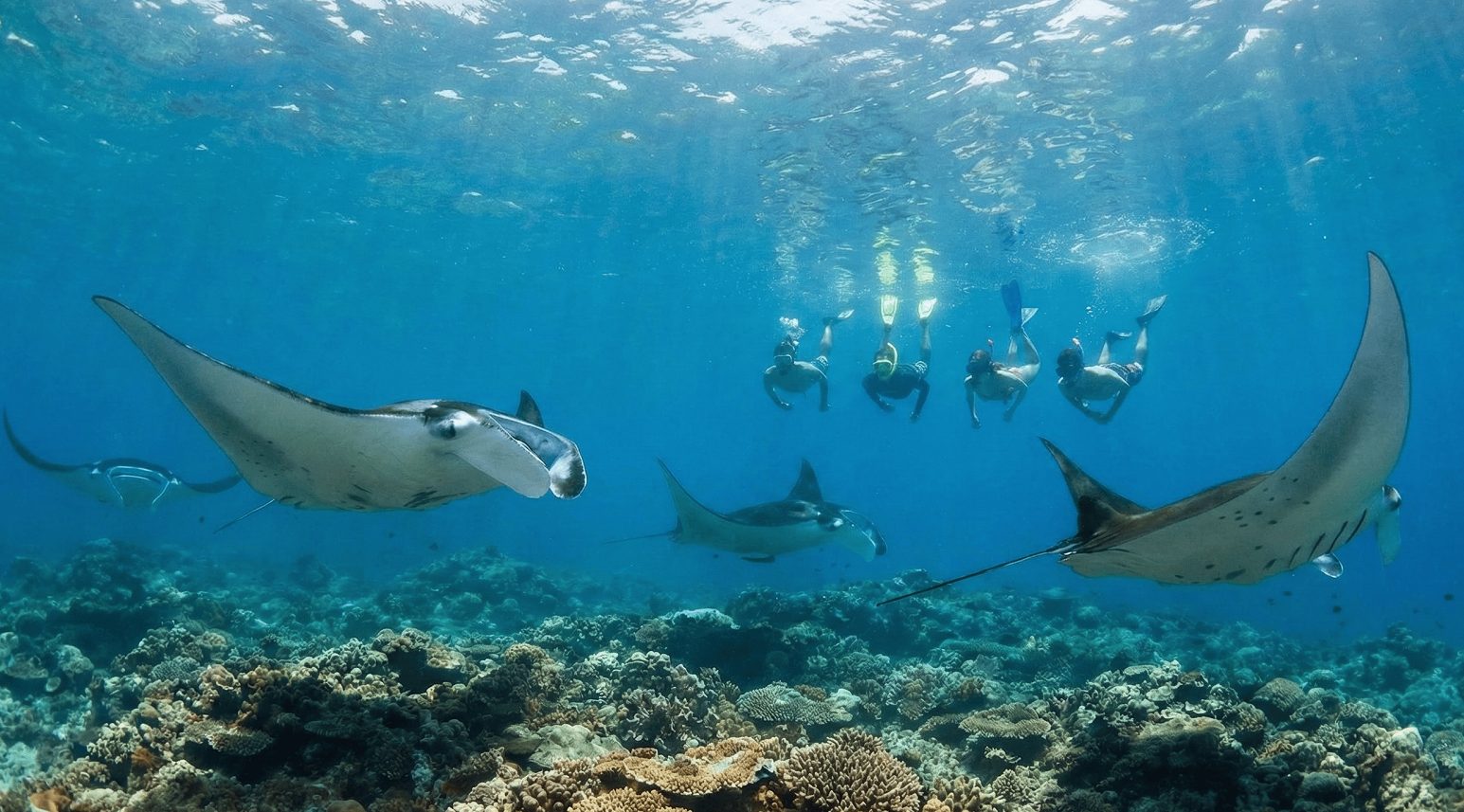
You’re floating in the middle of the Indian Ocean, the water is surprisingly chilly—like, way colder than you’d expect for the tropics—and you’re breathing through a cheap plastic tube while staring into a deep, dark blue abyss. Then, out of nowhere, a shadow appears. It’s huge. It’s moving toward you like a silent, underwater spaceship with a five-meter wingspan. That’s the moment you realize why people put up with the bumpy boats and the early wake-up calls. Seeing a Manta Ray in the wild is … well, it’s life-changing. Honestly, if you come to Nusa Penida and don’t get in the water with these things, you’ve missed the whole point of the island. It’s the crown jewel of Nusa Penida snorkeling, and nothing else even comes close.
But let’s be real for a second. It isn’t always like a National Geographic documentary. Sometimes it feels more like a wet, salty parking lot. There are boats everywhere, people kicking you in the face with their fins, and the smell of diesel fumes hanging in the air. It’s chaotic. It’s messy. I’ve seen people crying because they got water in their mask while a three-meter ray was gliding right under them. But when you dip your head under and see those gentle giants? All that annoying stuff just disappears. It’s just you and the rays. And maybe a bit of sea sickness. But mostly the rays.
Manta Point vs. Manta Bay: Don’t Get Them Confused
Most tourists don’t realize there are actually two main spots where the mantas hang out. They just tell their driver “I want to see mantas” and hope for the best. Big mistake. Depending on the weather and the swell, your experience can be totally different. I’ve been to both a dozen times, and they feel like different planets.
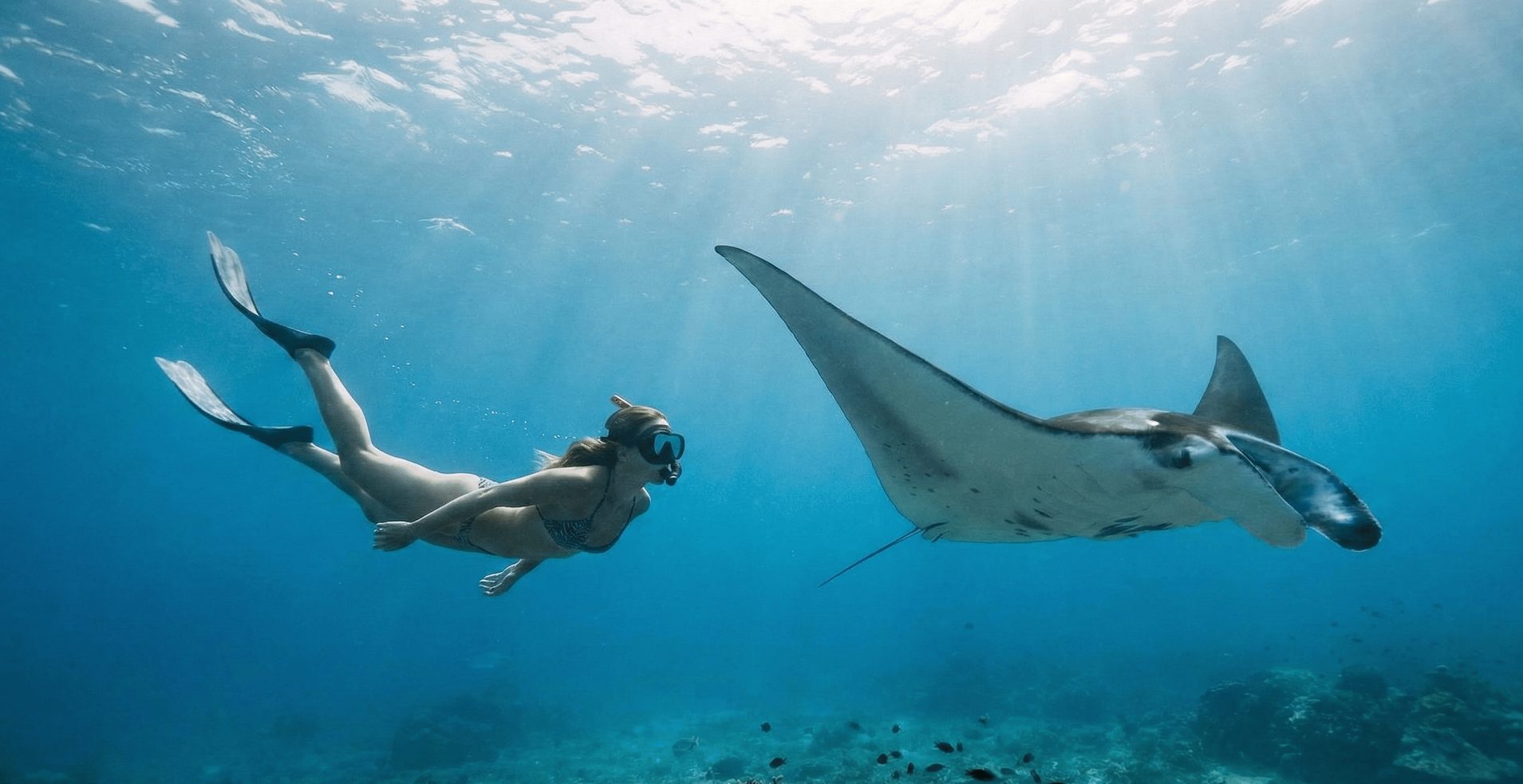
Manta Point is the heavy hitter. It’s located on the south side of the island, right at the base of these massive, towering limestone cliffs that look like they belong in King Kong. This is a “cleaning station.” The mantas come here to let tiny little fish pick parasites off their skin. It’s an underwater car wash. Because it’s on the exposed side of the island, the water here is often rough. Big swells. Deep water. It’s not for the faint of heart. If you aren’t a confident swimmer, you might panic a bit when the boat starts tossing you around like a toy. But this is where you see the *big* ones. The five-meter residents. It’s humbling to be that small next to something that large. It feels ancient down there. Dark and deep.
Manta Bay is different. It’s shallower, closer to the harbour, and usually calmer. This is where they go to eat. They swim in circles near the surface, filtering plankton through their gills. You don’t have to dive deep here; you can just float on the surface and watch them pass right under your chest. It’s easier for beginners, but it can get incredibly crowded. I’ve seen thirty boats in one tiny cove before. It’s a bit of a circus, but if the mantas are there, you won’t even notice the other people. Usually. If you’re on a Nusa Penida day trip, this is most likely where your captain will take you because it’s faster to get to.
The “Manta Dance” and Why Ethics Actually Matter
I see it every time I’m out there. Someone gets too excited, tries to swim after a ray, and reaches out to touch it. Don’t. Just … don’t. Their skin has a protective mucus layer that keeps them healthy. When you touch them, you’re basically giving them a skin infection. Plus, they’re wild animals. If you chase them, they’ll just leave. And then everyone else’s trip is ruined because you wanted a “close-up” for your stories.
The best way to see them is to just stay still. Float. Let them come to you. They are curious creatures. If you aren’t splashing around like a drowning cat, they will often glide right up to you, looking you in the eye as they pass. It’s a much better experience when it happens on their terms. Honestly, the best encounters I’ve had were when I just hung back and watched the “dance” from a distance. They move so gracefully, it’s almost hypnotic… until someone’s flipper hits you in the ear. That happens a lot.
The Cold Hard Truth About the Water
People think Bali is always warm. Not the water around Penida. The currents coming up from the deep trenches around the island are freezing. Well, maybe not freezing, but they’ll wake you up. Most Nusa Penida tour operators provide shorty wetsuits. Wear one. Even if you think you’re tough. After forty minutes in the water, you’ll be shivering. Also, the swell is real. The boat will rock. People will throw up. I’ve seen it happen to the best of them. If you’re prone to sea sickness, take the pill *before* you get on the boat. Taking it once you feel sick is like putting on a seatbelt after the crash. Pointless.
Beyond the Mantas: Gamat and Crystal Bay
Usually, a snorkeling trip isn’t just about the mantas. The boat captains will take you to a few other spots to fill out the morning. Gamat Bay is my personal favorite. The coral there is vibrant—purples, oranges, greens—and there are tons of turtles if you’re lucky. The current can be a bit tricky, but the guides are usually good at keeping an eye on you. It feels like a real reef, not just a tourist stop.
Then there’s Crystal Bay. It’s a classic. Clear water, white sand bottom, and thousands of little reef fish. It feels like swimming in an aquarium. It’s the “dessert” of the snorkeling trip. By the time you get here, the sun is high, the water feels a bit warmer, and you’re probably starving. Most tours include a lunch stop after this, and believe me, you’ll eat anything by that point. Saltwater makes you hungry in a way I can’t explain. The snorkeling in Nusa Penida is world-class, but it’s also physically draining.
Logistics: Booking the Right Trip
You’ve got two choices. You can book a tour from Bali, where they pick you up at your hotel in Seminyak or Canggu, zip you over on a fast boat, do the snorkeling, and bring you back by sunset. It’s efficient. It’s easy. Но это длинный день. You spend a lot of time in transit and you’re at the mercy of the big group schedule.
The other option? Stay on the island. Head down to Banjar Nyuh harbour in the morning and find a local boat. It’s cheaper, more flexible, and you get to the manta spots before the massive crowds arrive from the mainland. If you can be in the water by 7:30 AM, you’ll have a much better time. By 10 AM, the “manta soup” starts—more humans than rays. I think staying on the island is the way to go if you actually care about the experience and not just the photo. You can check the Nusa Penida travel guide for more tips on where to stay near the harbour.
The Gear and the GoPro Trap
Most tours give you a mask and fins. Check the mask before the boat leaves. If the silicon is cracked, it’s going to leak, and a leaky mask ruins everything. And for the love of god, don’t just drop your GoPro. I’ve seen dozens of people lose their cameras at Manta Point because they didn’t have a wrist strap or a floating handle. The ocean is 20 meters deep there. Once it falls, it’s gone. The mantas aren’t going to bring it back for you.
Also, sunscreen. Please use reef-safe stuff. The regular chemicals in most sunscreens kill the coral reefs. It’s a small thing you can do to make sure the island stays beautiful for the next person. Wear a rash guard too—it protects you from the sun and the occasional jellyfish sting. They aren’t dangerous, just annoying, like a little zap of electricity.
Final Thoughts: Just Do It
Is it perfect? No. Is it crowded? Yes. But swimming with a Manta Ray is one of those things that stays with you forever. You’ll forget about the cold water. You’ll forget about the smell of the boat engines. You’ll just remember that massive, silent creature gliding through the blue right in front of you. It’s magic. Just take the pill, wear the wetsuit, and don’t touch the rays. You’ll be fine.
Honestly, the ocean around Penida is wild. It doesn’t care about your plans. Sometimes the mantas don’t show up. That’s nature. But when they do? It’s the best show on earth. Just make sure you’re ready for the bumps. It’s a wild ride out to Manta Point, but standing on that boat with the wind in your face, looking for shadows in the water … there’s nothing like it. Seriously.
Comparison of Nusa Penida Snorkeling Spots
| Spot Name | Type of Marine Life | Difficulty Level | What to Expect |
|---|---|---|---|
| Manta Point | Giant Reef Mantas | Hard (Big Swells) | Deep blue, cold water, massive rays. |
| Manta Bay | Feeding Mantas | Medium | Crowded boats, shallow water, easy sightings. |
| Gamat Bay | Coral & Turtles | Moderate | Clear water, beautiful reef, can have currents. |
| Crystal Bay | Colorful Fish | Easy | White sand, calm near the shore, chill vibes. |
| Wall Bay | Drift Snorkel | Easy / Fun | The current carries you along a coral wall. |